
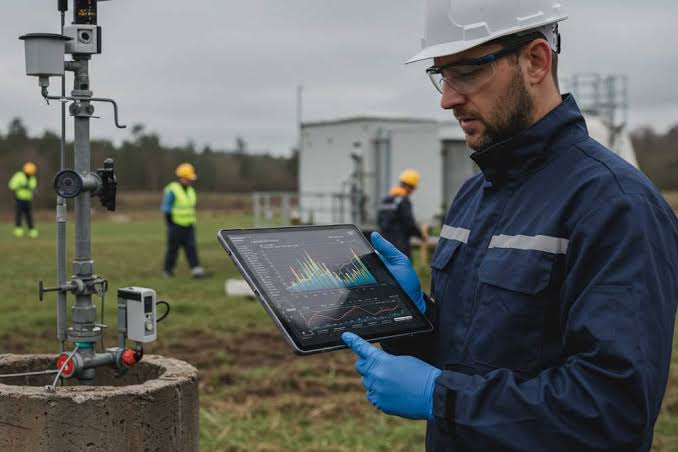
Groundwater contamination can remain unnoticed because the problem develops below the surface. A leaking tank, chemical storage area, waste operation, septic system, or contaminated soil may create migration pathways that are not obvious from ordinary site observations.
EPA describes source-water protection as preventing contamination of both surface-water and groundwater sources used for drinking water.
Identify Potential Sources Before Sampling
Good groundwater management begins with a clear site history. Current operations matter, but former land uses can be equally important because buried infrastructure or older disposal practices may remain relevant years later.
Review available property records, chemical inventories, storage locations, drainage features, wells, tanks, previous environmental reports, and known releases before deciding where investigation should focus.
Understand How Water Can Move
Groundwater does not necessarily stay beneath the point where contamination began. Soil conditions, groundwater elevation, subsurface geology, fractures, utility corridors, and pumping can influence movement.
Companies examining their regulatory exposure may encounter legal compliance resources during preliminary research. Site-specific decisions, however, generally require qualified environmental and legal input rather than assumptions based on general web material.
Build Monitoring Around Actual Risk
Monitoring wells are useful only when their placement, construction, sampling, and analytical program address the questions that need answering.
A limited investigation can miss contamination if wells are installed in unsuitable locations or sampled for the wrong compounds.
| Monitoring Question | Why It Matters | Possible Evidence |
|---|---|---|
| Where could a release begin? | Defines source areas | Site history |
| Which direction may water move? | Guides monitoring | Hydrogeologic data |
| What substances are plausible? | Guides laboratory analysis | Chemical records |
| Is contamination changing? | Tracks migration | Repeated sampling |
Protect Drinking-Water Sources Proactively
EPA notes that source-water protection practices should reflect contaminant threats, landscape conditions, public input, and other site-specific factors.
Protection may involve controlling chemical storage, maintaining tanks, managing runoff, inspecting waste areas, reducing spill potential, and responding rapidly when evidence of a release appears.
Environmental stories appearing through regional publishing channels can increase awareness, but contamination decisions require verified sampling data and applicable regulatory standards.
Preserve Reliable Records
Historical groundwater information becomes more valuable over time. Well logs, sampling results, laboratory reports, chain-of-custody records, groundwater elevations, maps, corrective actions, and maintenance records can reveal trends that one isolated test cannot.
Consistent documentation also makes it easier for consultants and regulators to understand what has already been investigated.
Respond to Unexpected Results Carefully
One elevated laboratory result may need confirmation, while a consistent pattern across multiple locations may require broader investigation. Interpretation depends on sampling quality, site conditions, analytical methods, and applicable standards.
Anyone reviewing online environmental discussions should distinguish general commentary from official regulatory requirements. Cleanup or reporting thresholds can differ between programs and jurisdictions.
What Groundwater Monitoring Cannot Do Alone
Monitoring describes conditions at specific locations and times. It does not automatically identify the source, determine legal responsibility, define the complete extent of contamination, or prove that conditions between wells are identical.
A poorly designed network can create false confidence. The purpose should be defined first, followed by a monitoring strategy capable of answering that question.
Frequently Asked Questions
How quickly can groundwater contamination spread?
There is no universal rate. Movement depends on geology, groundwater flow, contaminant properties, source strength, pumping conditions, and other site-specific factors.
Does clear groundwater mean it is uncontaminated?
No. Many contaminants cannot be identified by appearance, smell, or taste. Appropriate laboratory testing is generally required to determine whether specific substances are present.
Should old monitoring records be retained?
They can be highly useful. Historical results may show changes in contaminant concentrations, groundwater elevations, migration patterns, or previous investigation work.
Act on Patterns Before They Become Larger Problems
Groundwater protection works best when potential release sources are identified early and monitoring is designed around realistic pathways. Keep dependable records, investigate unusual results, and consult the appropriate environmental agency or qualified professional when contamination is suspected.
This article provides general informational material and is not a substitute for legal, environmental, or regulatory advice.


