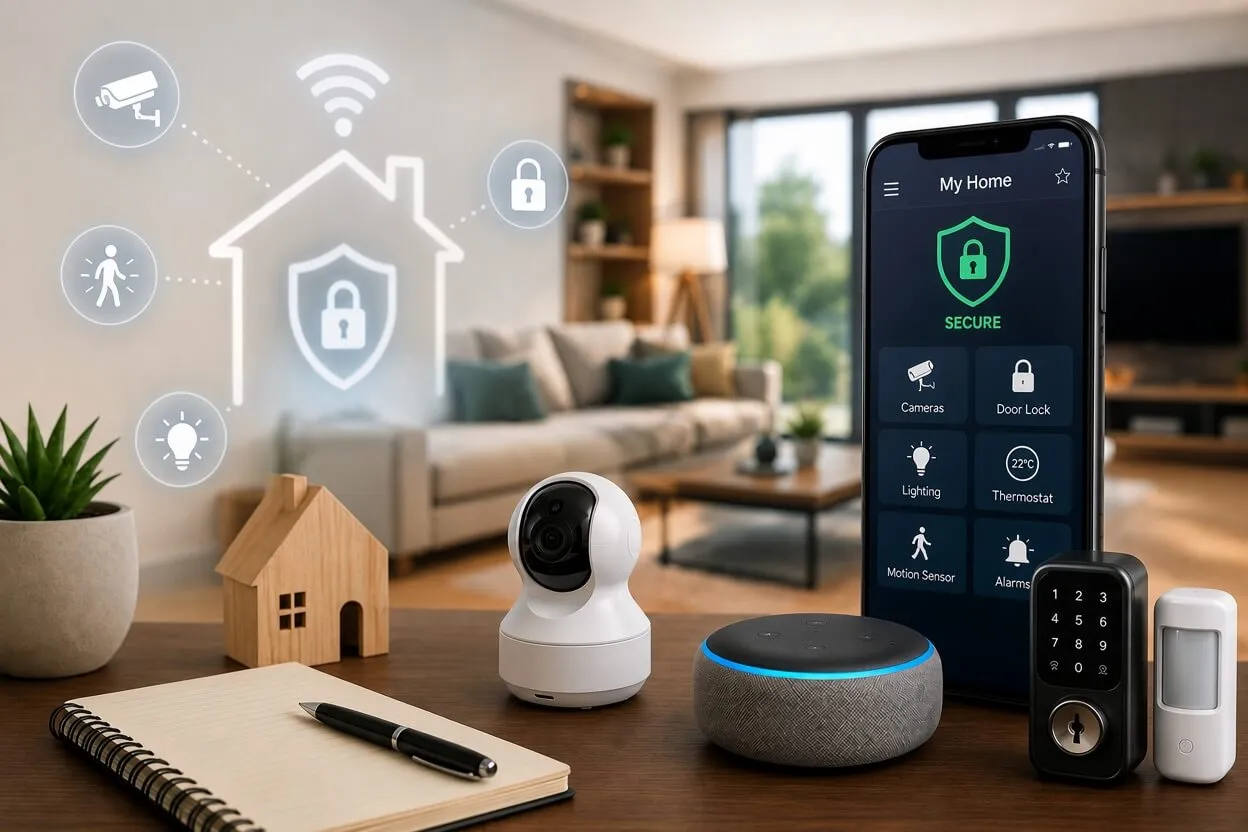
A luxury home can contain expensive automation that looks impressive during a showing but becomes frustrating after closing if credentials, programming, subscriptions, network equipment, integrations, or service contacts are missing. Buyers should test the system as infrastructure, not as a collection of gadgets. Readers who want a wider property-planning lens can also review property planning perspectives while weighing long-term ownership trade-offs.
Five Smart Home Platforms Common in High-End Residences
Create an inventory before closing. Identify the controller, lighting system, shades, thermostats, audio, video, cameras, door stations, locks, gates, pool controls, network hardware, voice control, and any cloud services. Then confirm which components stay with the home, which accounts must transfer, and which equipment belongs to a service provider.
High-end smart-home platforms are usually installed through professional integrators, and the quality of the system depends on both the platform and the local design, programming, network, and support. A buyer should obtain the integrator’s contact information and understand whether the existing firm will continue service after ownership changes.
1. Control4
Control4 is a professionally installed smart-home platform that can integrate lighting, audio, video, security, climate, shades, and other connected devices into one control system. Its value here depends on execution, so ask what documentation, admin access, programming files, account transfers, network credentials, integrator support, and manual controls are needed so the system can be operated and serviced after closing.
2. Crestron Home
Crestron Home is a whole-home automation platform designed to control lighting, climate, entertainment, shades, security, and other systems through centralized interfaces and professional integration. For a high-value property, ask what documentation, admin access, programming files, account transfers, network credentials, integrator support, and manual controls are needed so the system can be operated and serviced after closing. A separate look at property trend analysis can help place these service choices within the wider real-estate market.
3. Savant
Savant provides smart-home automation for lighting, climate, music, video, and energy management, with systems typically designed and installed through professional integrators. In practical terms, ask what documentation, admin access, programming files, account transfers, network credentials, integrator support, and manual controls are needed so the system can be operated and serviced after closing.
4. Lutron HomeWorks
Lutron HomeWorks is a high-end lighting and shading control platform used in professionally integrated residences, with options for keypads, dimming, shades, and broader system coordination. For this decision, ask what documentation, admin access, programming files, account transfers, network credentials, integrator support, and manual controls are needed so the system can be operated and serviced after closing.
5. Josh.ai
Josh.ai is a smart-home control platform aimed at sophisticated residences, using voice, touch, automation, and integrations to coordinate connected devices across the home. When comparing this provider, ask what documentation, admin access, programming files, account transfers, network credentials, integrator support, and manual controls are needed so the system can be operated and serviced after closing.
What Should Buyers Test Before Taking Ownership?
Run real scenarios, not isolated button presses. Try arriving home, leaving, nighttime lighting, climate control, audio zones, shades, gates, security, door stations, and internet failure if practical. Check whether wall controls still work when an app or cloud service is unavailable.
Request passwords and transfer steps securely. Do not leave default credentials or former-owner accounts active. After closing, change network, security, remote-access, and administrator credentials with the help of the integrator where needed, and document the new configuration for future service. When aesthetics and high-end living are part of the decision, luxury home inspiration can offer additional perspective without replacing property-specific due diligence.
Frequently Asked Questions
What smart-home information should transfer with a luxury property?
Useful items include system inventories, model numbers, integrator contacts, programming or project files when transferable, manuals, warranties, account-transfer instructions, network diagrams, and details on subscriptions or cloud services.
Should buyers test every smart-home feature before closing?
Test the important daily and safety-related functions at minimum, including lighting, climate, shades, gates, locks, security, door stations, network connectivity, and manual fallbacks. Complex entertainment features can also be checked if they are material to the purchase.
What should happen to the seller’s smart-home accounts?
Ownership-linked accounts and remote access should be removed or transferred according to the platform’s process. After closing, the buyer should change administrator, network, security, and remote-access credentials where appropriate.
Treat Automation Like a Building System
Smart-home technology deserves the same seriousness as HVAC, electrical, or security infrastructure. Buyers should know what is installed, who supports it, how it is controlled, what happens when the internet fails, and which credentials must transfer. A tested and documented system adds value; an undocumented one can become an expensive troubleshooting project.