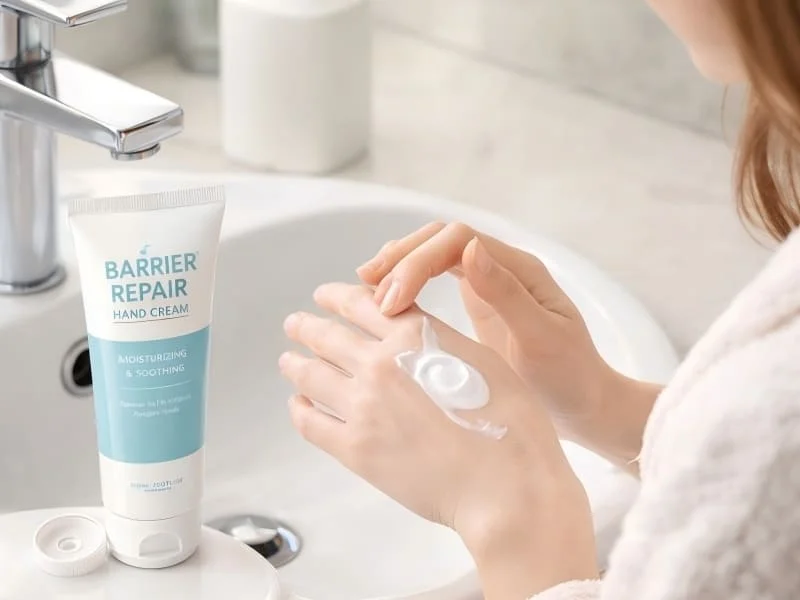
Rough hands commonly develop after repeated washing, cleaning, cold weather, low humidity, or exposure to detergents. The problem isn’t always a simple lack of moisture. Repeated exposure can damage the outer skin barrier, allowing water to escape more easily and making hands feel tight, scaly, cracked, or sore.
Consistent protection usually works better than occasionally applying a large amount of lotion.
Understand What Keeps Drying Your Hands
Water can contribute to hand dryness when the skin is repeatedly washed and left without moisturizer afterward. Detergents, solvents, cleaning products, and frequent wet work can add more irritation.
The American Academy of Dermatology notes that frequent water exposure and chemicals can contribute to hand eczema, which may initially resemble ordinary dry skin.
While everyday body-care reading can offer broader context, persistent painful cracking shouldn’t automatically be dismissed as ordinary dryness.
Moisturize at the Times That Matter
Apply moisturizer after washing rather than waiting until your hands feel severely dry. Creams and ointments usually stay on the skin longer than thin lotions, particularly overnight or during dry weather.
Fragrance-free products may reduce the chance of adding another irritant. The AAD recommends frequent moisturizing and notes that creams or ointments can help support dry, irritated hands.
Among safe-care reference material, the most practical advice is usually the routine you can repeat after ordinary tasks rather than an occasional intensive treatment.
Protect Hands During Repetitive Work
Gloves can reduce direct exposure to dishwater, household cleaners, and other irritating materials. They should fit comfortably, and prolonged dampness inside gloves can itself become irritating.
Use lukewarm rather than excessively hot water. Dry between the fingers carefully, then apply moisturizer while the skin still feels slightly hydrated.
Readers exploring healthy-living topics may see countless product suggestions, yet reducing exposure often matters as much as the moisturizer chosen.
| Problem | Common Trigger | Helpful Habit |
|---|---|---|
| Tight, dry skin | Frequent washing | Moisturize afterward |
| Rough knuckles | Cold, dry air | Use cream or ointment |
| Cracks | Barrier damage | Protect from irritants |
| Itchy rash | Possible dermatitis | Consider evaluation |
Where Simple Moisturizing Can Fall Short
A moisturizer can’t solve every rough-hand problem. If redness, intense itching, burning, blisters, deep fissures, or repeated flare-ups accompany the dryness, hand eczema or contact dermatitis may be involved.
Another common mistake is using heavily fragranced products because they feel luxurious. Sensitive, damaged skin may tolerate simpler formulas better. Reapplying a gentle product consistently is usually more useful than constantly switching between new creams.
When Rough Hands Need Medical Attention
Extremely dry or painful hands that fail to improve with frequent moisturizer deserve evaluation. Deep cracks that bleed, weeping areas, crusting, pus, increasing swelling, or significant pain can indicate a problem requiring professional care.
The American Academy of Dermatology’s hand eczema guidance explains that hand eczema may cause inflamed skin, burning, blisters, painful cracks, and bleeding.
Avoid repeatedly treating an unexplained rash with random products, since identifying the trigger may be necessary for lasting improvement.
Frequently Asked Questions
Is hand cream better than lotion for rough hands?
A thicker cream or ointment often provides longer-lasting protection for severely dry hands. Fragrance-free formulas may also be easier for irritated skin to tolerate.
Why do my hands stay rough after moisturizing?
Repeated washing, chemicals, cold air, or an underlying dermatitis can keep damaging the barrier faster than occasional moisturizer can repair it. Look at both skin care and ongoing exposure.
Can frequent handwashing cause cracked skin?
Frequent washing can contribute to dryness, especially without moisturizing afterward. Handwashing should still be continued when needed for hygiene; applying a suitable moisturizer afterward can help limit dryness.
Make Moisture Part of the Routine
Rough hands tend to improve more reliably when protection becomes habitual. Use gentle cleansing, moisturize after washing, limit direct contact with irritating chemicals, and protect hands during wet work. If cracking, itching, pain, or inflammation continues despite consistent care, professional evaluation can help distinguish routine dryness from eczema or another skin disorder.
This article is for general informational purposes and is not a substitute for professional medical advice, diagnosis, or treatment.